
Can’t Decide Whether to Preserve or Donate Your Wedding Dress? Here’s How to Choose
Part of you wants to keep the dress because of everything it represents. Another part wonders if holding onto something you may never wear again makes sense. Donating it could give the dress a new purpose, yet letting it go can feel like giving up a piece of a day that mattered deeply.
That back-and-forth may be exactly why the decision has taken months instead of minutes. The problem is that “preserve or donate” asks you to weigh sentimental value against practicality, two things that are difficult to compare on the same scale. A better place to start is figuring out what you want the dress to mean to you from here.
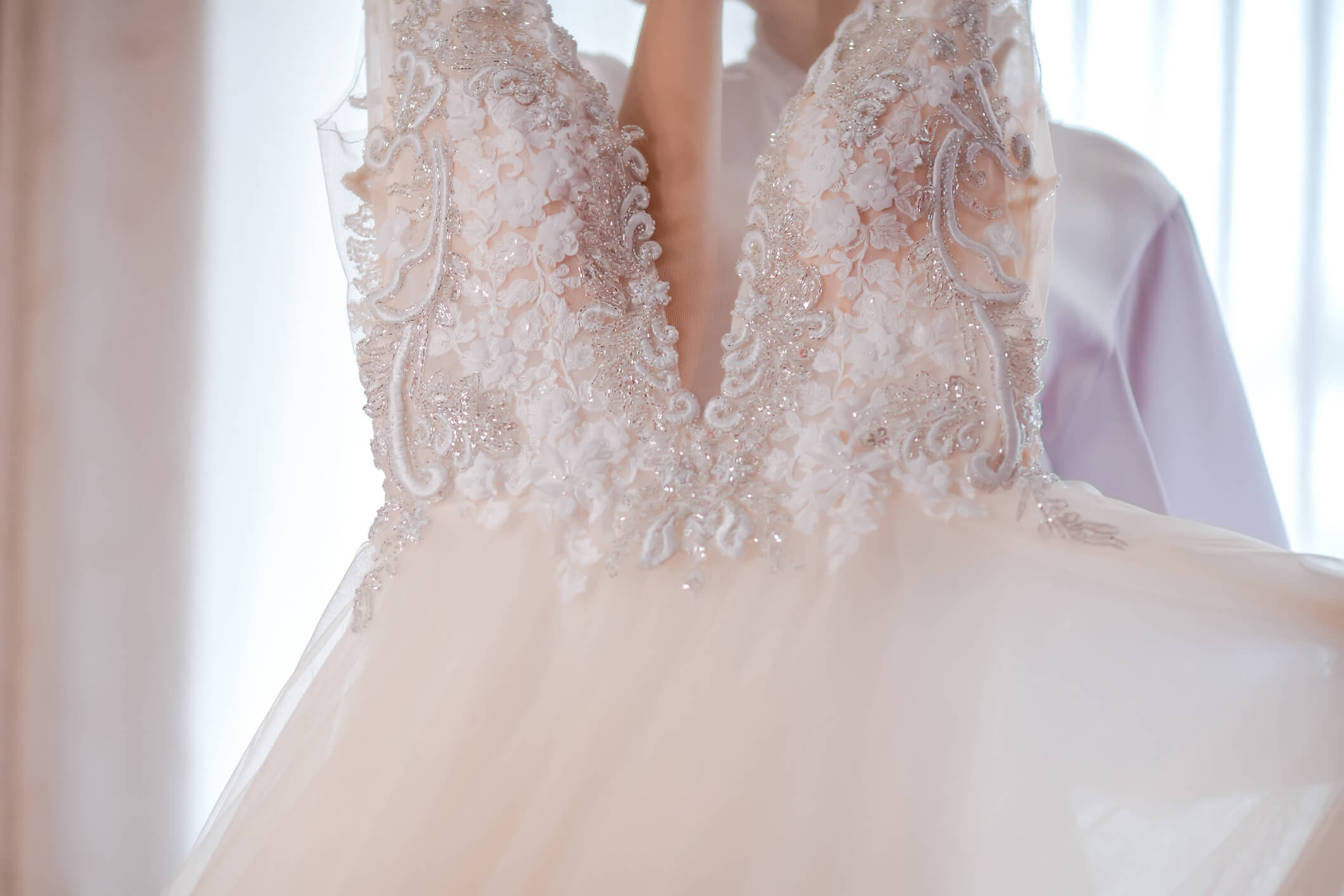
The Better Question: Who Is This Dress For Now?
Let your arms hang naturally, then check your wrists in a mirror. A well-proportioned jacket should reveal about a quarter-inch of Stop asking what should happen to the dress. Ask who it’s for. Not who it was for on your wedding day. Who it’s for now, sitting in your closet, your parents’ attic, or a garment bag you haven’t opened since the honeymoon. That answer sorts you into one of four groups, and once you know your group, the preserve or donate debate mostly resolves on its own.
Be honest with yourself. The dress is probably for one of these:
- Genuinely nobody
- A specific person you can picture wearing it or keeping it
- A future version of yourself
- A stranger who needs a wedding dress and can’t afford one
If It’s for a Specific Person, Preserve It, and Tell Them
This is the easiest case to sort. A daughter, a niece, a godchild, a close friend who’s mentioned she loves your dress. If you can picture a real person trying it on some day, even years from now, preserve it. That’s your answer.
Tell that person the dress exists and for whom it’s meant. An intention you never voice is how dresses end up boxed in a basement for thirty years, then get donated or thrown out by a relative cleaning out the house who has no idea what it was or for whom it was meant. A five-minute conversation now prevents that outcome entirely.
If It’s for Future You, Be Honest About What You’d Actually Do With It
Wanting to keep the dress for yourself is a legitimate answer. Press on what “for future you” actually means, though, because the phrase can hide two very different intentions.
One version is concrete. You picture pulling it out for your tenth anniversary, having it altered into something shorter you’d actually wear again, or booking a few formal photos in it once the wedding chaos settles. Those are real plans with a real picture attached. That’s a fine reason to preserve.
The other version is more vague: “I might want it some day,” with no specific occasion behind it. If that’s closer to where you land, look at how you treat other things you’re keeping “just in case”, for example, the boxes in the garage you haven’t opened in years. If you don’t take those out and look at them, the dress will likely follow the same pattern.
If the Honest Answer Is Nobody
That’s not a failure. It just means your honest answer sits further down this list than future you, and it’s worth knowing that before you give the dress another decade of closet space.
Sit with that answer for a moment rather than rushing past it. Nobody is a consolation prize here. It’s just as legitimate as any of the other three, and it’s usually the answer people are most reluctant to name because it feels like it should come with guilt attached. It doesn’t have to. Knowing honestly that the dress isn’t for a specific person, and isn’t really for you either, is exactly what clears the way toward the next two sections.
If It’s for Someone You’ll Never Meet, Donate It
Donating your dress is an option for brides who do not want to preserve their dresses. It gives your dress a new purpose by helping someone you may never meet wear it on her wedding day. Instead of remaining unseen in your closet, it can become part of another meaningful memory.
Donation may feel right if you:
- Want the dress to be worn again
- Feel comfortable letting it go
- Prefer helping another bride over storing it
- Do not plan to pass it down or repurpose it
Before donating, check the condition requirements of the organization. Many cannot accept dresses with noticeable stains, yellowing, tears, or missing pieces.
Professional cleaning can improve the chances of your dress being accepted and worn. It removes hidden residue and prepares the dress for its next chapter.
The Third Option Almost Nobody Considers
Almost nobody mentions this option, mostly because bridal shops sell dresses; they don’t repurpose them, so no one along the way ever brings it up. Your wedding dress doesn’t have to stay a wedding dress.
Consider what’s possible:
- Turn the lace, buttons, and beading into a christening gown for a future child
- Shorten the skirt into a dress you’d genuinely wear to another event
- Frame a single panel of lace or embroidery as a keepsake instead of storing the whole garment
- Turn the veil into handkerchiefs for other family weddings, so a piece of the dress shows up again without the whole item taking up space
Repurposing keeps the material and the meaning while eliminating the storage problem. If none of the other options felt quite right, this is usually why. You weren’t choosing between preserving and donating. You just hadn’t been told there was a third door.
Every Path Starts the Same Way
Whether you preserve, donate, or repurpose your wedding dress, the first step stays the same: have it professionally cleaned. Hidden wine, food, makeup, or perspiration marks can discolor the fabric as they age. Cleaning now protects your options while you decide what feels right.
Why cleaning matters for every path:
- Preserve it: removing hidden residue helps prevent yellow or brown spots from developing in storage.
- Donate it: a clean, well-kept dress has a better chance of reaching another bride.
- Repurpose it: a seamstress needs clean, stable fabric before turning the dress into another garment or keepsake.
However, cleaning and preservation are not the same service. Cleaning removes stains and residue already on the fabric, while preservation prepares the clean dress for long-term protective storage.
You can clean your dress without committing to preservation. That simple first step gives you more time to choose without allowing preventable stains to worsen.
One Wedding Day, Years of Memories – Preserve Your Dress with Parkway Custom Drycleaning
If the questions in this article have you considering preservation, you don’t have to make that decision without first understanding what your dress needs. Start with a professional assessment. At Parkway Custom Drycleaning, we can inspect the fabric, construction, embellishments, stains, and any mending that may be needed, then walk you through the appropriate cleaning and preservation options.
Since 1926, Parkway Custom Drycleaning has gently hand-cleaned, air-dried, and hand-finished wedding dresses, from simple bridal dresses to vintage and highly embellished designs. Each dress receives individual attention throughout the process, giving you a clearer understanding of its condition and what may be possible before moving forward.
And regardless of the choice you make, Parkway is here for you. Our seamstresses can restyle your dress, and our cleaning and preservation staff can restore your gown if that is your preference. If you’re giving the dress away, consider freshening it up before you do.
No matter where you live – in the greater metropolitan Washington, D.C. area, request your wedding dress assessment today. Parkway Custom Drycleaning serves brides throughout Washington, D.C., the Maryland suburbs, and Northern Virginia, with Pickup and Delivery Service available across most of the region.
Wedding Dress Cleaning, Preservation, and Alterations have been part of the Parkway tradition since our founding in 1926!
Phone: +1 301-901-3318
Email: admin@parkwaydrycleaning.com