
The Dry Clean Only Label: Why Ignoring It Could Ruin Your Clothes
You glance at the label inside your blazer before tossing it onto the laundry pile, and there it is: “Dry Clean Only.” The Federal Trade Commission actually treats two labels as two different instructions. “Dry Clean” is a recommendation, the manufacturer’s preferred method, but you have some room to work with it.
“Dry Clean Only” is a warning. It means the manufacturer tested the fabric, the construction, and the dyes, and concluded that water causes damage you can’t undo. That’s the label on your tailored blazer, your wool coat, your silk dress – the pieces that cost real money and aren’t easy to replace.
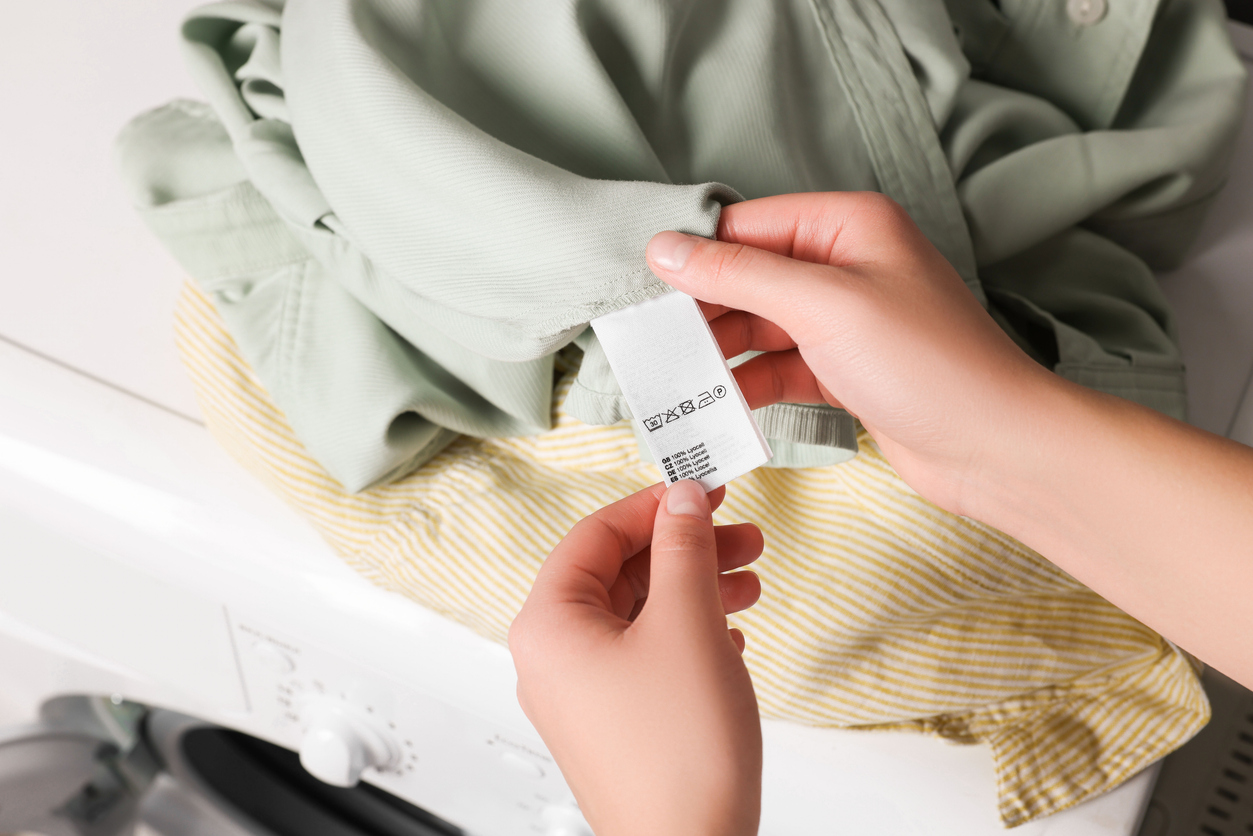
Before you decide whether a dry cleaning bill is worth skipping, here’s what actually happens to those fabrics and structures when they’re washed instead.
The Hidden Construction Details That Don’t Survive Water
Most clothing labeled “Dry Clean Only” isn’t just fabric. It’s a system of layers working together, and that system is what the label actually protects.
Inside the collar, cuffs, and lapels of a blazer sits interfacing, a stiff layer that holds the shape you see from the outside. Most interfacing is fused with heat activated adhesive or held in place with light stitching, and water breaks down both. Once it’s wet, the interfacing can bubble, shift, or dissolve into a gummy mess that no amount of ironing can fix.
Shoulder padding works the same way. It’s built from layers of foam or wool felt shaped to hold a specific form under dry conditions. Water compresses that structure permanently, so the padding never bounces back to its original shape.
Linings cause a different problem. They’re often a contrasting fiber from the shell fabric, which means they shrink at a separate rate. Wash a wool coat with a polyester lining, and the lining pulls tight while the wool stays loose, leaving you with bunching and pulling at every seam.
Adhesive bonding ties a lot of this together in modern garments, and heat from a washer or dryer is exactly what breaks apart that bond.
What Happens to a Wool Blazer or Suit Jacket in the Washing Machine
Wool fibers have a scaly surface that locks together under heat and agitation, a process called felting. One 30-minute wash cycle can shrink a blazer by a full size, sometimes more. The lining, built from a different fiber, won’t shrink at the same rate, so it bunches up and pulls away from the shell at the seams.
The shoulder structure goes next. The padding that gave your blazer its sharp line collapses and flattens, and no steaming or pressing technique brings it back. The lapel roll, that subtle curve along the front edge, flattens out completely and stays that way.
A $400 blazer can come out of a single wash cycle looking like it shrank in the dryer and got run over. It usually has.
What Happens to a Silk Dress Under Home Wash Conditions
Water spots are the first sign.
Silk dries unevenly when wet, leaving rings and blotches where the fibers absorb moisture at different rates. Once those spots set, they’re often permanent, even after a second wash meant to even things out.
Dye bleed is the second problem.
Many silk garments use dyes that aren’t fully colorfast, especially in deeper or more saturated shades. Wash a silk dress at home, and you risk uneven fading or color shifting in blotches instead of evenly across the fabric.
Then there’s the sheen.
Silk’s natural shine comes from the smoothness of the fiber, and water weakens that structure at a microscopic level. The fabric survives, technically, but it looks dull and tired instead of luminous.
Seams suffer too, since silk shrinks differently than the thread holding it together, which leads to puckering along every seam line. Even careful hand washing causes this damage in dyed or structured silk.
What Happens to a Cashmere or Camel Wool Coat
Cashmere earns its price tag through loft, the soft, airy quality that comes from fine, uncompressed fibers. Water and agitation flatten that loft permanently through matting and felting, and once cashmere mats, it stays matted. The fabric that once felt like a cloud now feels like a blanket left out in the rain.
Shoulder distortion shows up next, along with length shrinkage that can shorten a coat by inches. The structure tailored to your frame no longer fits the way it did previously.
Linings separate from the shell for the same reason they do in blazers: different fibers shrinking at different rates. The result is a coat that bunches, sags, and feels lumpy no matter how it’s worn.
Here’s the financial reality worth sitting with: a $600 cashmere coat damaged this way usually costs more to restore professionally (if restoration is even possible) than it would have cost to dry clean it properly in the first place.
Damage That Looks Reversible But Isn’t
- Felted wool stays felted. Once those fibers lock together, no amount of stretching, steaming, or brushing reverses the process.
- Water stained silk that’s been ironed sets the stain permanently since heat bonds the discoloration into the fiber instead of lifting it.
- Dissolved interfacing can’t be replaced without taking apart the garment and rebuilding the structure from scratch.
- Set dye bleed becomes part of the fabric’s color, not a surface problem a cleaner can lift off.
- Structural collapse in shoulder padding means the padding has lost its shape permanently and needs full replacement, not repair.
Safe At-Home Maintenance Between Professional Dry Cleanings
You’re not going to dry clean a blazer after every wear, and you don’t need to. A few simple habits between professional cleanings stretch the time and keep your pieces looking sharp.
- Steam out wrinkles and light odors instead of reaching for water or a washing machine.
- Blot fresh spots with a barely damp cloth, working from the outside of the stain inward.
- Air out garments after wearing them, giving fibers time to release moisture and odor before they go back into the closet.
- Brush wool with a soft garment brush to lift dust and surface debris before it sets in.
- Hang pieces on properly shaped hangers so the shoulders and structure hold their form.
These habits extend the life of your clothes between visits. They don’t replace dry cleaning, and they’re not meant to replace it.
Signs a Garment Needs Dry Cleaning Sooner Rather Than Later
You’Catching problems early changes the outcome of a cleaning, so it’s worth knowing what to watch for. If you have worn your garment to an event, it will most likely need a professional dry cleaning. This preventive measure is your best approach to restoring your garment before odors and stains become permanent through oxidation.
Here are other telltale signs that your garment needs professional attention:
- Faint yellowing or shadowing around collars and underarms, which comes from body oils and turns permanent if left untreated.
- Lingering perfume or cologne scent that builds up in the fibers over multiple wears.
- Light stains that are still fresh and soluble, before they have time to oxidize and set.
- Creasing or structural wrinkles that won’t release with steam alone, signaling the fabric needs a deeper clean to reset.
None of these signs mean a garment is ruined. They mean it’s time to take it in before a small problem turns into one that is unfixable.
Protect Your Investment Pieces With Parkway Custom Drycleaning in Washington, D.C.
YTailored blazers, silk dresses, and cashmere coats need a cleaner who treats them like investment pieces, not just another bag on the rack. Parkway Custom Drycleaning provides fine dry cleaning service throughout metropolitan Washington DC. For 100 years, discriminating clientele have trusted Parkway to care for their delicate and special garments, with careful attention to construction details including interfacing, shoulder padding, fine fabrics, and dyes.
Schedule your next visit with Parkway Custom Drycleaning today and let our award-winning team protect your wardrobe with eco-friendly cleaning, extraordinary hand finishing, detailed inspections, and Pickup and Delivery Service throughout most of metro Washington, D.C., Montgomery County, Maryland, and Northern Virginia.
Contact Parkway Custom Drycleaning:
Phone: (301) 965-1828