
Five Men’s Suit Alterations That Make the Biggest Difference in Fit
Stand in front of a mirror in your suit for five minutes and you’ll probably spot what’s off: the jacket hangs a little boxy, the sleeves eat into your shirt cuff, the trousers pool at your shoes. None of that means the suit is wrong for you. It means nobody’s actually adjusted it to fit you specifically since the day you bought it.
These five adjustments fix exactly that, ranked by how much they change the fit.
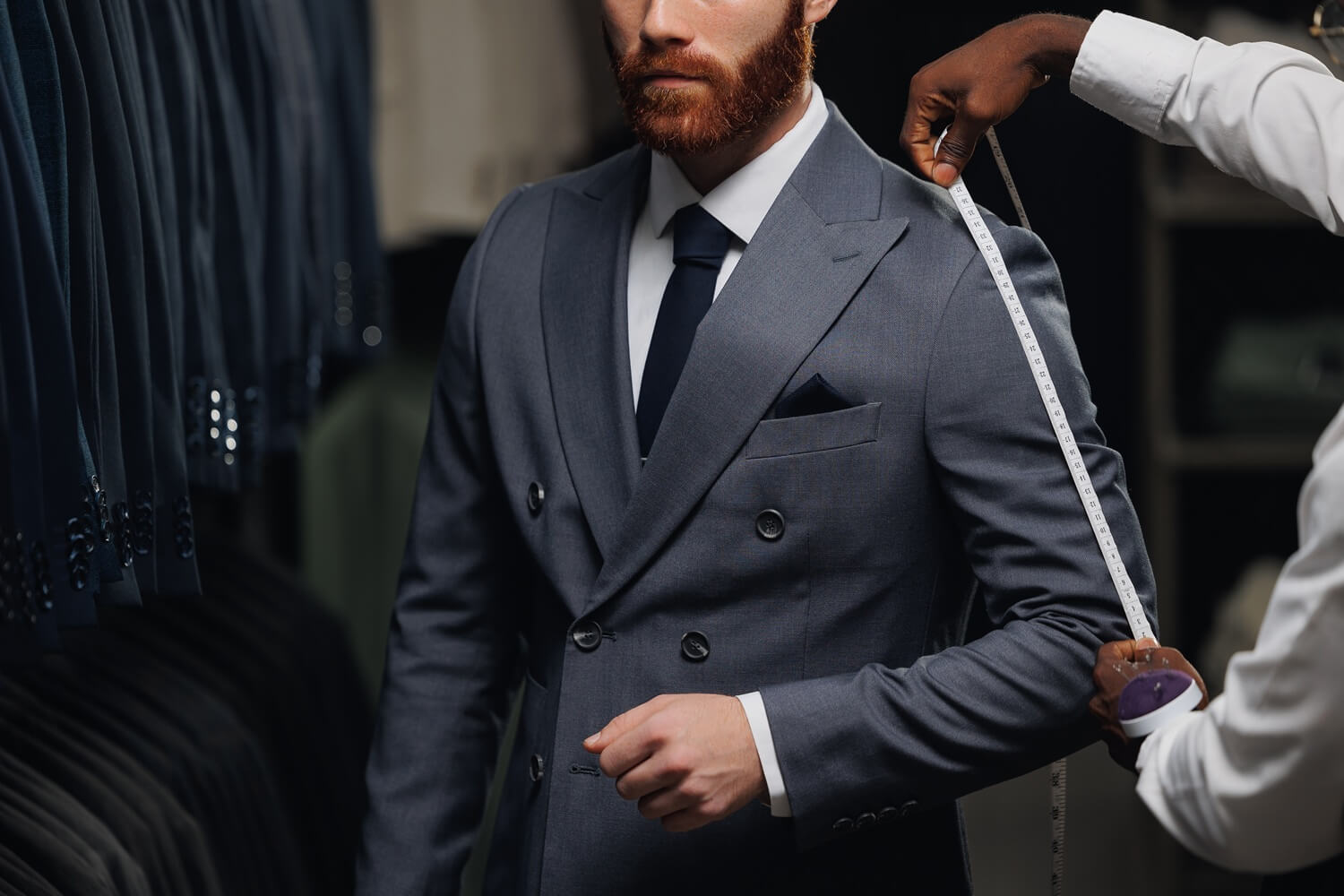
Sleeve Length: The Quarter-Inch That Separates Sharp From Sloppy
Let your arms hang naturally, then check your wrists in a mirror. A well-proportioned jacket should reveal about a quarter-inch of shirt cuff below each sleeve. Many off-the-rack jackets run one to two inches too long, making the sleeves look heavy and your hands appear smaller.
Use this quick fit check:
- Right length: about a quarter-inch of shirt cuff remains visible.
- Too long: the jacket sleeve hides the shirt cuff completely.
- Too short: more than half an inch of cuff shows when your arms rest naturally.
Choose the right alteration:
- Shorten from the cuff. This standard adjustment is quick, affordable, and nearly invisible once finished.
- Shorten from the shoulder. This more complex (and more expensive) option preserves functional cuff buttons that actually open and close.
If your cuff buttons are decorative, choose cuff-side shortening. You will get the same clean result without paying for unnecessary work.
This alteration usually sits at the lower end of a tailoring budget, and many tailors finish it within a day or two. If you can afford only one adjustment before a wedding, interview, or important dinner, start here. Correct sleeve length delivers an immediate improvement without changing the overall structure of the jacket.
Jacket Waist Suppression: Creating Shape Through the Torso
Button your jacket and check the mirror. If the fabric falls straight from chest to hips, the jacket may look boxy, even when the shoulders fit. Waist suppression shapes the jacket around your waist.
What your tailor changes:
- Takes in the side seams from chest to hip.
- Follows your torso’s natural taper.
- Preserves the shoulder fit.
Check the finished result:
- Just right: the jacket follows your shape without restricting movement.
- Too loose: the torso still looks wide or rectangular.
- Too tight: an X-shaped crease appears around the fastened button.
Ask for a gentle definition, not a squeezed-in look. You should sit, reach, and move comfortably.
This alteration works especially well if your weight has changed or you sized up to fit your shoulders. By adjusting the middle, your tailor creates a sharper silhouette without rebuilding the jacket, or charging you for work you do not need.
Trouser Hem and Break: The Length Conversation That Defines the Whole Look
The break is the fold where your trouser leg meets your shoe. Get it right and your whole outfit reads current. Get it wrong and it ages the suit by a decade, no matter how sharp the jacket looks.
- No break: hem just grazes the top of the shoe. Best for most modern suits and slimmer cuts.
- Slight break: a small fold right at the shoe. A traditional, safe choice for most builds.
- Full break: fabric pools on top of the shoe. Skip it. Reads outdated on current cuts.
Wear the actual shoes you’ll pair with the suit to your hemming appointment. Swap dress shoes for sneakers and a half-inch of heel height changes everything about how that break sits.
If you wear the same suit with more than one pair of shoes, tell your tailor up front. A dress boot with a slightly higher heel needs a different hem than a low-profile oxford, and it’s easier to settle on one break that works for both than to re-hem every time you switch shoes.
Trouser Seat, Waist, and Taper: Where Off-the-Rack Goes Most Wrong
This is the fit problem you’ve probably fought the longest, and it’s really three issues tangled into one. Ask your tailor to handle all three together, not separately:
- Waistband: taken in if your pants slide down or bunch under your belt.
- Seat: adjusted across the rear so trousers don’t sag when you sit or pull tight when you walk.
- Taper: slimmed through the thigh and calf so the leg line matches the rest of the suit.
Don’t let anyone fix just one of these in isolation. Taper the leg without checking the seat first, and you’ll end up with a slim leg attached to trousers that still bag in the rear.
Off-the-rack trousers are sized by waist and inseam alone, so they can’t account for how the rest of you is built. If you’ve ever bought a pair that fit your waist but sagged everywhere else, this is the fix you skipped.
Jacket Length: The Proportional Adjustment Most Men Skip
Jacket length controls how balanced your suit looks. Stand naturally with your arms at your sides, then check the hem.
Use this quick fit test:
- Balanced: the jacket ends near your curled fingers and covers your seat.
- Too long: it makes your legs look shorter and the suit appear dated.
- Too short: it exposes too much of your seat and disrupts your proportions.
Know why this alteration costs more: your tailor must reshape the bottom hem and adjust the back vents so they hang and open correctly. This detailed work makes jacket shortening one of the most expensive, time-consuming suit alterations.
Follow the right order:
- Adjust the jacket waist.
- Correct the sleeve length.
- Check the jacket length last.
Waist adjustments can change how the hem sits. Finalizing the length last prevents you from paying for the same work twice.
What to Take (And Wear) to Your First Suit Fitting
A fitting only tells your tailor the truth if you show up dressed the way you’ll actually wear the suit; therefore, take:
- The shirt you’ll wear with it, since collar height and fabric thickness change how the jacket sits on your shoulders.
- The shoes you’ll wear with it, since that sets your hem length and break.
- The belt you’ll wear, since it changes how much the waistband needs to come in.
- Whatever you normally carry, since a phone, wallet, and keys change how the jacket hangs.
Move around during the fitting. Reach for something overhead. Sit down. Take a few steps. A jacket that looks flawless standing still can pull hard across the shoulders the second you reach for a door handle, and a fitting where you just stand there will never catch that.
Plan for two fittings if you’re changing several things at once. The first sets the major adjustments; the second checks them once the fabric has actually been cut and sewn, which is the only way to catch anything that has shifted.
Get Your Suit Properly Altered at Parkway Custom Drycleaning, Serving the greater metro Washington, D.C.-Area Professionals
AParkway Custom Drycleaning handles this exacting work in-house: sleeve length, waist suppression, trouser hem and break, seat and taper adjustments, and full jacket alterations. You’ll work with our couture quality seamstresses who fit men’s suiting regularly.
For anyone searching for suit alterations near Washington D.C., our N. Bethesda, Maryland location is a quick trip from the city for D.C.-area professionals who want it done right. And for simple alterations we also offer convenient Pickup & Delivery throughout the District of Columbia, Montgomery County, MD and N. Virginia. MA of our clients come in for the fitting and then have our drivers return the garments with our route delivery service..
Come in for a fitting with the in-house tailors at Parkway Custom Drycleaning. Bring the suit. Bring the shoes. Get the fit right, this time for good.
Address: 5455 Randolph Rd., N. Bethesda, MD, 20852
Phone: +1 301-901-3318
Email: admin@parkwaydrycleaning.com
Fitting Hours:
- Saturday: 10:30 a.m. to 3:00 p.m. (call ahead to confirm)
- Monday to Friday, 9:00 a.m. to 2:30 p.m.